Follow their visiting habits, favourite routes, and activity patterns revealed through computer vision and CNN detection.

Total Recorded Visits
Average Visits per Night
Average Visit Duration
Peak Activity Hour
Most Active Night
Longest Visit
Shows the hours when possums most often appear in the backyard.
Displays how much time possums typically spend during a single visit.
Compares how possum activity varies across different days of the week.
Highlights seasonal changes and long-term trends in possum activity.
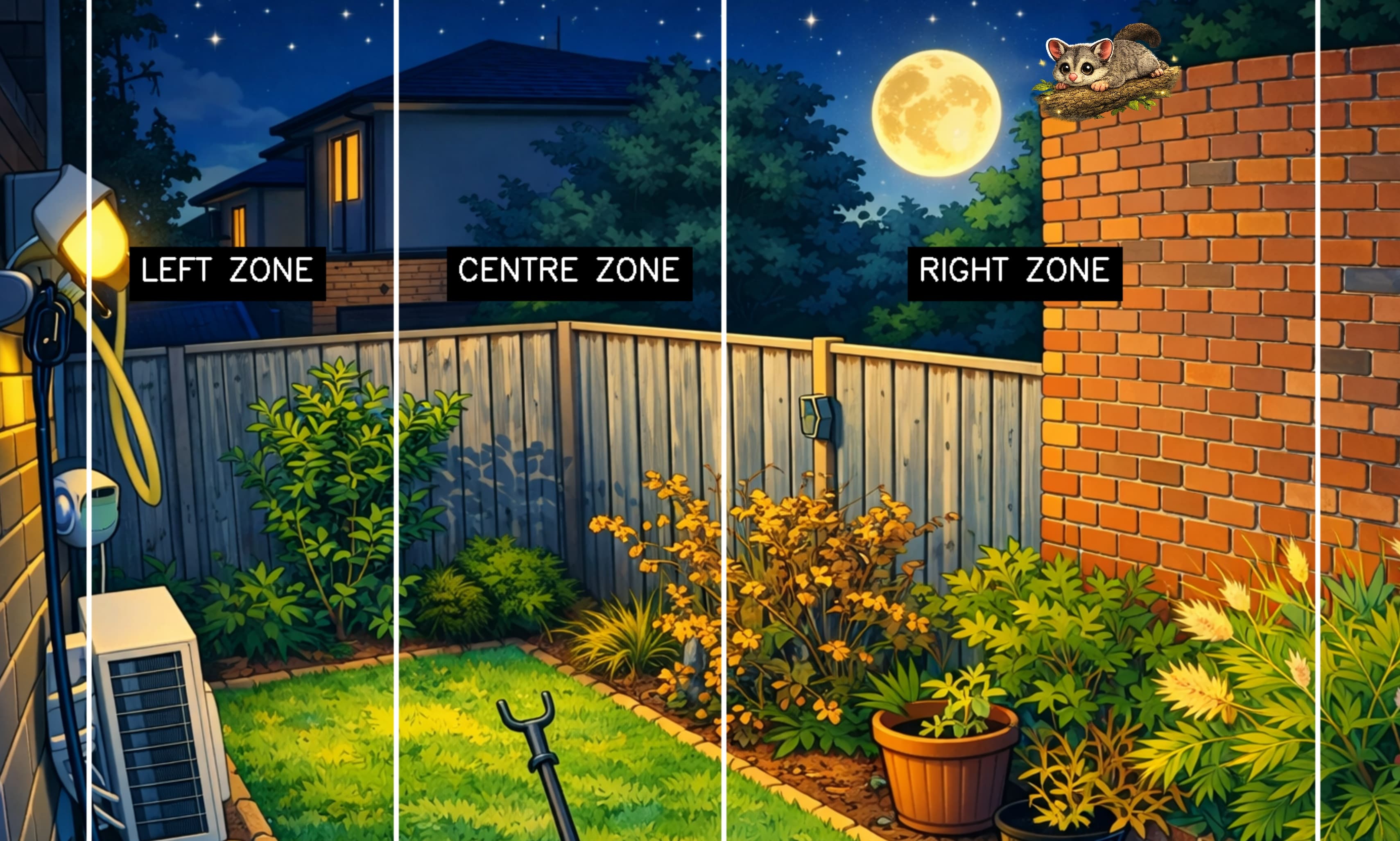
The beginning of nightly activity, when possums usually start appearing in the backyard.
The deepest part of the night, when possums are often actively moving around and exploring.
The period before dawn, when possums may begin finishing their nightly visits and preparing to leave.
mean = 32.48
sd = 25.99
This distribution reveals how active possums are during a visit. Do they keep moving steadily, or pause frequently? The shape of the curve shows whether most visits are energetic explorations or relaxed fence sit-ins.
This boxplot summarises how active possums are during a typical visit. The central line marks the median activity level, the box shows where most visits fall, and the whiskers reveal the overall spread. It highlights the balance between movement and rest — and whether a few visits were unexpectedly energetic (or impressively lazy).
mean = 40.57
sd = 23.73
This chart shows how fast possums tend to move during visits. The distribution helps distinguish between cautious, slow explorers and quicker nighttime dashers.
The boxplot summarises typical movement speed and variability. It shows whether speeds are fairly consistent — or if some visits involved unexpected bursts of acceleration.
mean = 351.53
sd = 311.15
This curve shows how far possums usually travel during a visit. The histogram reveals where most visits cluster, while the smooth density line highlights overall movement patterns — from short fence checks to longer nighttime patrols.
The boxplot summarises the typical range of travel distances. It shows the central tendency, variability, and whether a few adventurous possums decided to go the extra mile.
Pearson r = 0.29
p < 0.001 (statistically significant)
Based on 414 visits
Each point represents a visit. This plot reveals whether longer visits generally involve covering more ground — or whether some possums simply enjoy staying longer without travelling far. More time doesn't always mean more ground covered.
Pearson r = -0.45
p < 0.001 (statistically significant)
Based on 414 visits
Do longer visits mean more movement — or more sitting and observing? This plot explores whether possums become increasingly active the longer they stay, or if extended visits often include generous breaks.
Pearson r = -0.15
p = 0.002 (statistically significant)
Based on 414 visits
Are short visits quick dashes across the fence, while longer ones unfold at a calmer pace? This chart reveals whether speed changes with time — from brisk crossings to slow, deliberate nighttime strolls.
Active and idle always add up to 100% within a visit. When green rises, visits during that hour tend to be lively. When the darker band grows, possums are mostly pausing, watching... or simply enjoying a quiet fence moment.